
By Nat Kennedy, PhD student at UQAM
For less than $15 (or 3 payments of $3.99), you too can unlock a strange new world using the magic of ultraviolet light!
It is shocking just how many things glow in the dark when you go exploring with a blacklight. Most folks know that scorpions glow green under UV, and this trick has been well exploited by researchers hunting for scorpions in the desert at night. Despite knowing this myself, it was still incredible to see in person the first time I went light trapping in the Southern US. Photos just can’t quite prepare you for how bright they glow in person.

People have known for decades that scorpions fluoresce, but there is still no consensus as to why this happens. This trait does seem to be ancestral, though, as other basal chelicerates such as horseshoe crabs and sea scorpions also fluoresce using the same mechanism (Rubin et al., 2017).
Scorpions are not alone in their glowing glory, and over the years I have been delighted to find dozens of glowing lifeforms during nighttime explorations. The first time I went light trapping for moths, I was camping on the coast of Vancouver Island. Sadly, my $10 UV flashlight did very little to attract moths, so I decided to just play around with it at my campsite in the hopes of finding some glowing mushrooms. What I didn’t expect was that there is a local species of millipede that glows bright blue under UV! The fluorescence was so intense that it felt like I was looking at a photoshopped image, but it was real life.
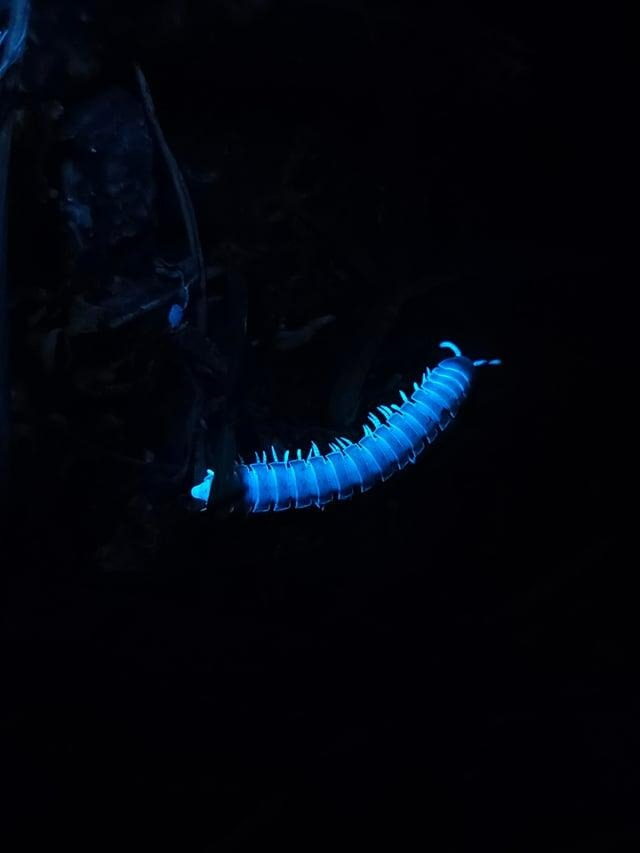
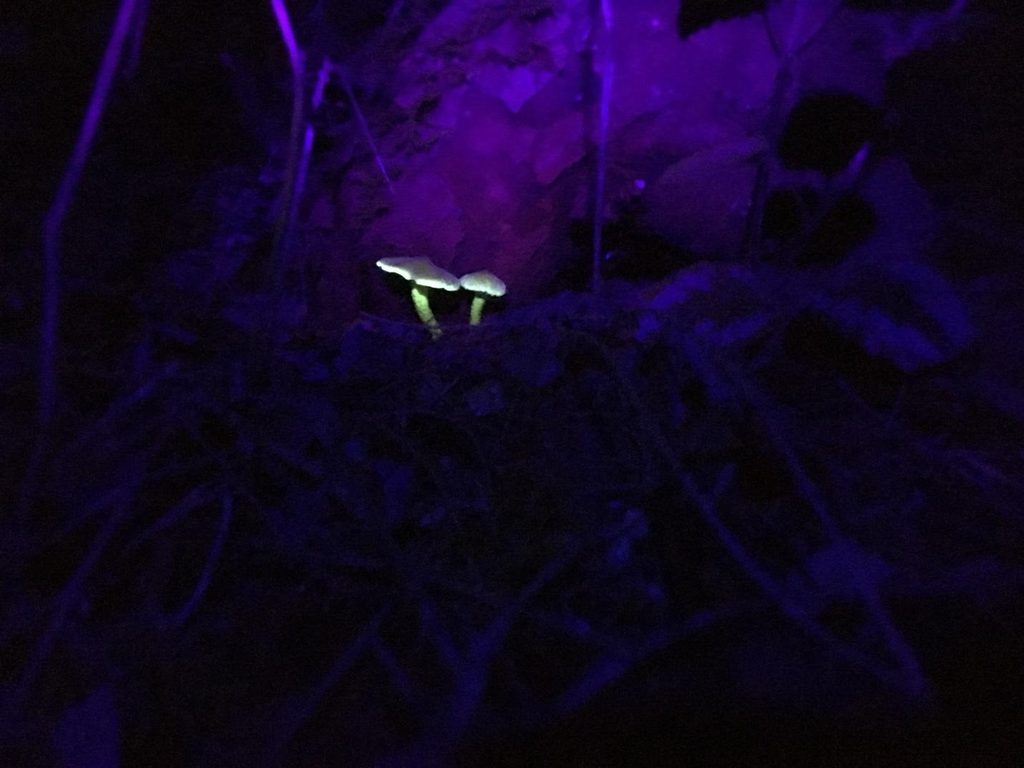
Since that day, I try to bring a UV light with me whenever I go adventuring after dark. I have since found the glowing mushrooms that I first hoped to see, although it was exceedingly difficult to photograph them with any clarity on my ancient iPhone:
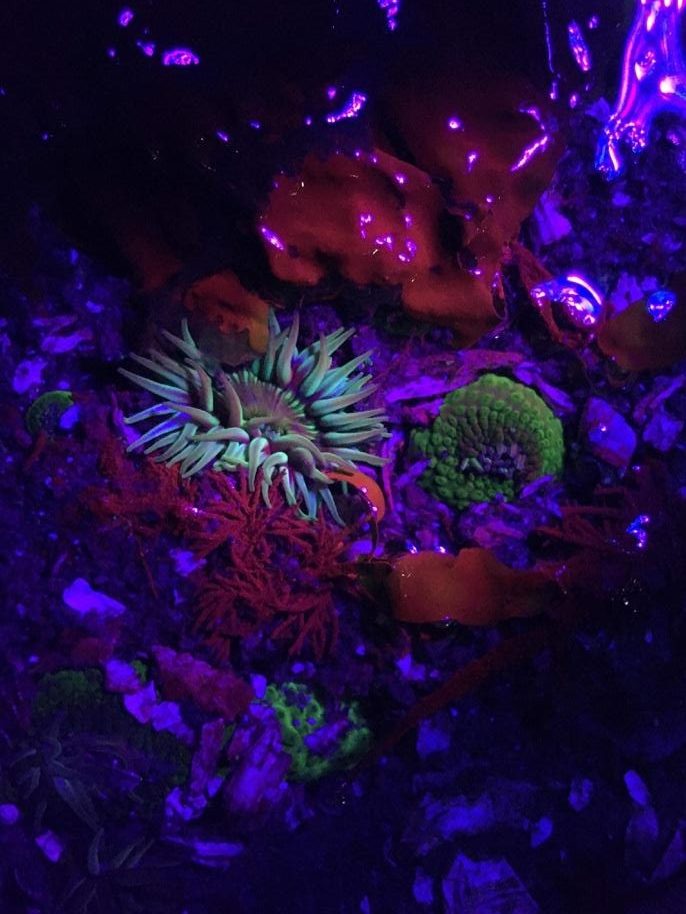
My favourite place to take the UV flashlight has to be the intertidal zone. In my experience, hiking through the woods may net a glowing mushroom or a millipede if you’re lucky, but a rocky seashore is almost guaranteed to light up in a hidden rainbow of colour.
In BC, the aggregating anemones fluoresce a ghostly green against the deep, blood-red backdrop of encrusting algae and kelp fronds. Unlike most other animals, the biofluorescence of anemones does appear to have a purpose, as fluorescent proteins have been shown to protect cells against oxidative stress (Clarke et al., 2024):
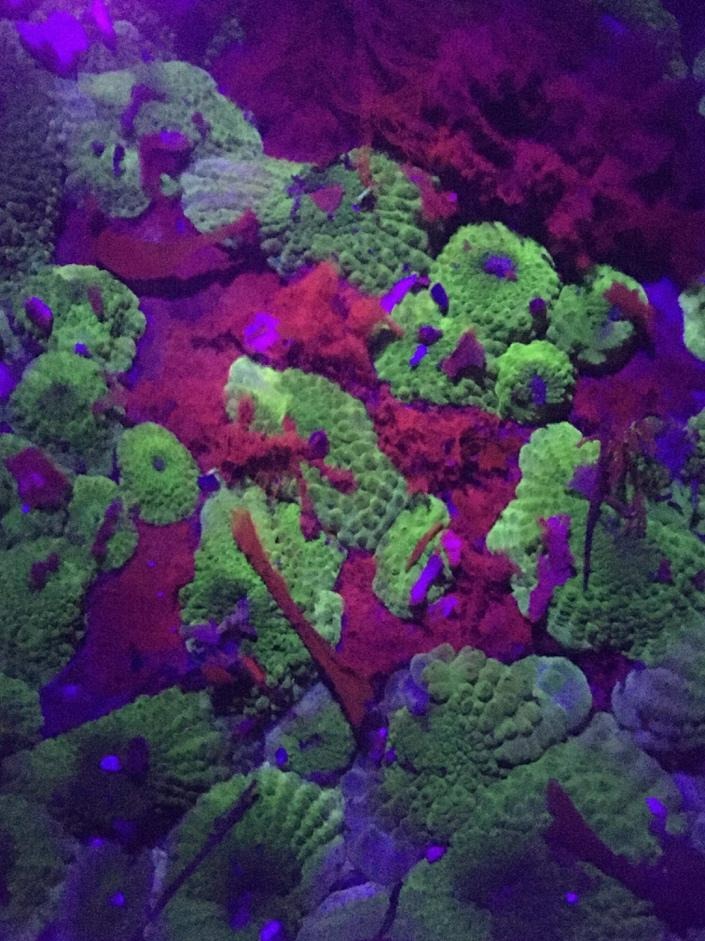
It’s not just invertebrates, biofluorescence has been observed in birds, some frogs, lizards, and even mammals! While it may be invisible to us without a blacklight, other animals may be able to detect this fluorescence. For reptiles and amphibians, this fluorescence is possibly related to conspecific detection in low light, but there is still much uncertainty about the role of fluorescence for birds and mammals (Jeng, 2019).
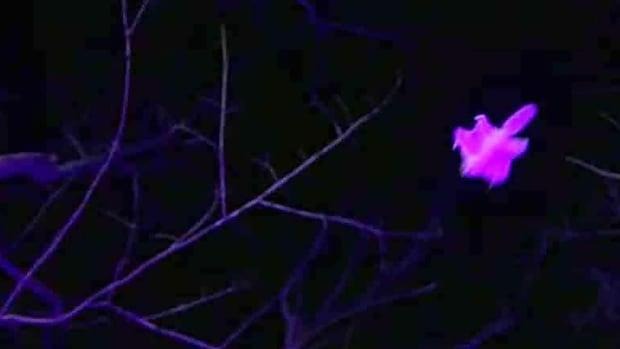
So heed my advice! Invest now! For only $8.99 (sacrificed to the devils at amazon.com), you too can enjoy the delights of our fluorescent planet!
About the Author
Nat Kennedy is a fourth-year PhD student in the Handa lab (UQAM). They are studying the impact of urban forest management practices on soil invertebrate communities. Despite being all in on bugs, their first love was the ocean! Trips to the beach are a serious affair, and they will structure entire vacations around low tide schedules. Find more cool tiny creatures on their Instagram! @send.nudibranchs


0 Comments