
By Morgane Henry, PhD candidate at McGill University
In spring 2022, as I was just finishing my first-year as a PhD student, my supervisor came into the office with an offer I couldn’t refuse: “Would you like to go to a workshop in Marrakech?” Needless to say, I immediately agreed, and that is how I embarked on a series of workshops and side-projects parallel to my main thesis topic that would lead to some really cool research and collaboration.
The aim of that first workshop, “InvaCost II”, was to study the global economic impacts of biological invasions using a newly developed, first-of-its-kind database that compiled all known costs caused by invasive species (for example, costs due to crop yield loss or the financial burden to manage these species). That workshop in Marrakech was amazing. It was my first international workshop, and having the opportunity to spend a week in a beautiful place working with brilliant scientists from all over the world was exciting and humbling to say the least.

As always when you put 40-ish researchers together, the number of ideas and potential projects grew dramatically every day of the workshop. After a few days, I started focusing on a project aimed at estimating the unknown economic costs of invasive species in the European Union. Of the ~13,000 known invasive species in Europe, only 1% have reported costs, leading to a massive underestimation of the true costs of these alien species in the EU and highlighting the need to develop revised estimates.
Once the workshop was over and I was back in Montreal, we started working on the modelling approach for the Europe project. I will not lie, this was not an easy period for me. The workshop was very stimulating, allowing us to focus only on a single topic without outside distractions. But being back in my routine and having to juggle the regular tasks of grad school, my thesis, and a new, challenging side project was difficult. This period, the winter semester of 2023, was a bit of a blur: in the beginning, I thought I could manage everything, but as the weeks went by, I started to feel more and more pressure and began to feel overwhelmed. I kept telling myself, just one more week and I’ll take a little break, but of course, that week became weeks and I didn’t slow down. I finally hit a breaking point and had to take time away from work to recover. Now looking back and reflecting on this time, I realize how exhausted and burnt out I was; it served as a wake-up call, and I promised myself I wouldn’t get in that same situation again. Rest, it turns out, is also part of the process. After I came back to work, we managed to finish and publish the Europe project. My supervisor and I developed a model capable of extrapolating costs using macroeconomic scaling and temporal modelling approaches. The results of the study were staggering, and we found that costs due to invasive species in Europe could be up to US$28 billion, which is 501% higher than what is currently reported.
After finalizing this side project, I said I wouldn’t do any more side quests and would focus on my thesis, which I did… for about a year and a half. During this time, I prioritized my mental health and my thesis work. I became more confident as a researcher and worked on better listening to how I felt (and not just pushing through). Since I wasn’t really involved with the InvaCost group during this time, I thought it would probably be the end of my collaboration with them. However, to my surprise, I received an invitation in the summer of 2024 to attend the next workshop in the series “InvaPact”: the group would now be focusing on the ecological impacts of biological invasions. At this stage of my PhD, I felt more confident about balancing side-projects and my everyday work, so I accepted the invitation and spent two weeks in Paris a few months later.
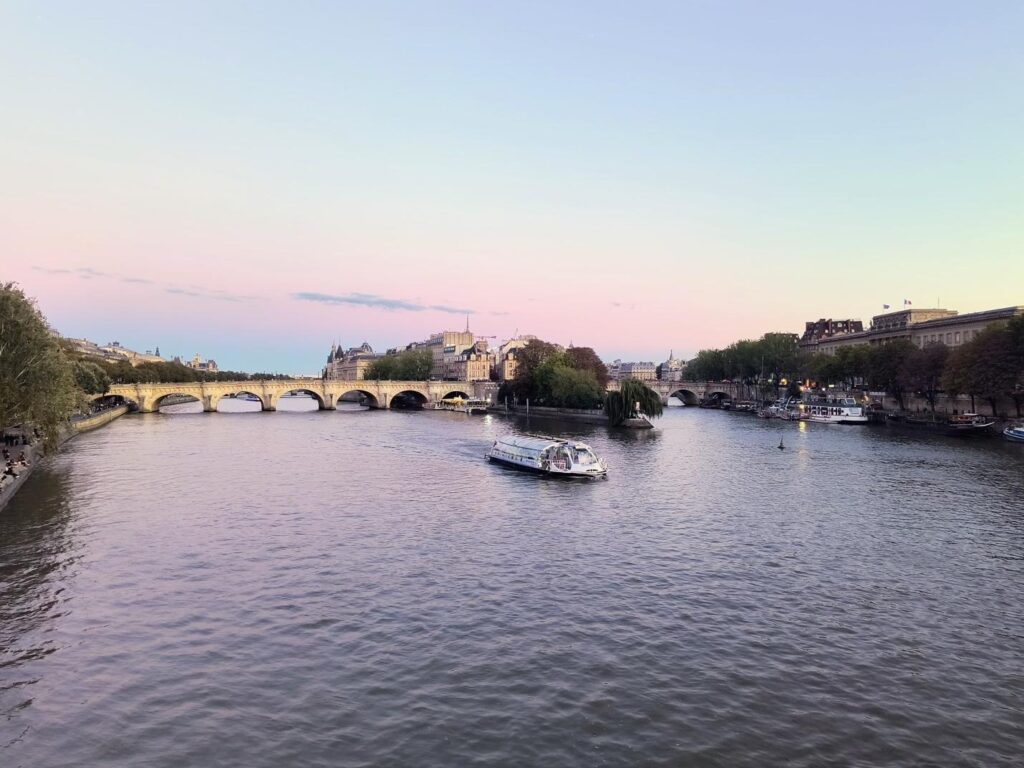
Attending the InvaPact II workshop was again an amazing experience: I got to see and work with people whom I had met at the workshop two years before, and I met new people in the invasion biology field. This time around, I felt more confident in my skills and in my ability to participate in the discussions. Similar to Marrakech, the number of projects quickly grew, and this time I was careful not to overcommit and only work on a few projects I was interested in and that I knew I could manage. After my time in Paris, I kept collaborating on the InvaPact project. The group met last November again in Barcelona, where several projects took shape — including one I am now leading on the ecological impacts of invasive species in Canada. Stay tuned for the results coming out soon!
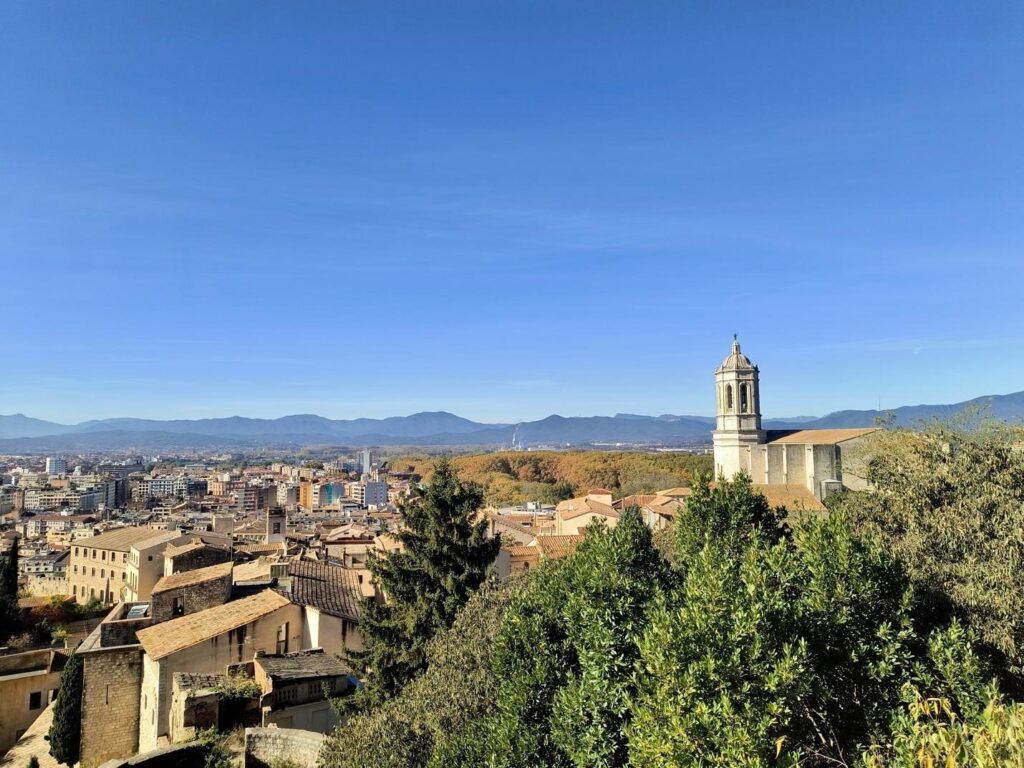
Looking back, these workshops and side-projects taught me things I couldn’t have learned from my thesis alone — how to collaborate across time zones and disciplines, how to pitch ideas to people you’ve just met, and how to keep momentum on a project when life gets in the way. The relationships I built through these experiences, and the skills I developed along the way, are ones I expect to carry well beyond my PhD.
For any grad student thinking about taking on side-projects: it can be an incredible experience, but ask yourself whether it aligns with where you want to go, and be honest about your bandwidth before you commit. The best opportunities will stretch your limits, but know where the line is before you cross it.
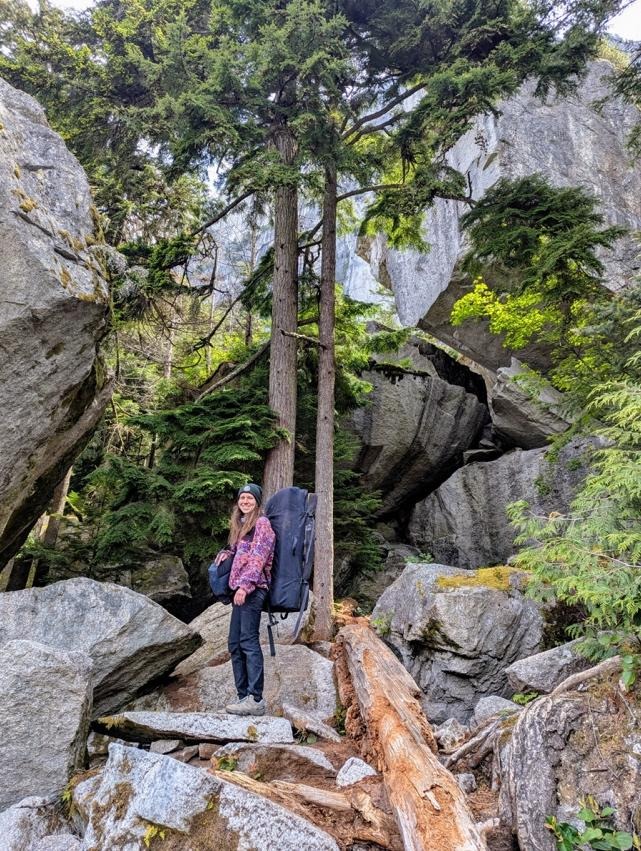
About the author
Morgane is a PhD candidate in the Leung Lab at McGill, where she studies the spatial and temporal dynamics of insect outbreaks. In particular, she focuses on the spruce budworm, a moth species native to Quebec that causes cyclical outbreaks, leading to millions of hectares of defoliation and widespread mortality among conifers. Website: https://morgane-henry.github.io/


Nice lesson! Its always a difficult line to follow: pushing yourself but not burning out.