
By Julia Goss, master’s student at Université de Sherbrooke
In December 2025, I had the pleasure of presenting my master’s research at the Winter 2025 edition of the Association for the Study of Animal Behaviour (ASAB) conference, in Edinburgh, Scotland. This conference brought together behavioural ecologists from across the world to share their latest findings.

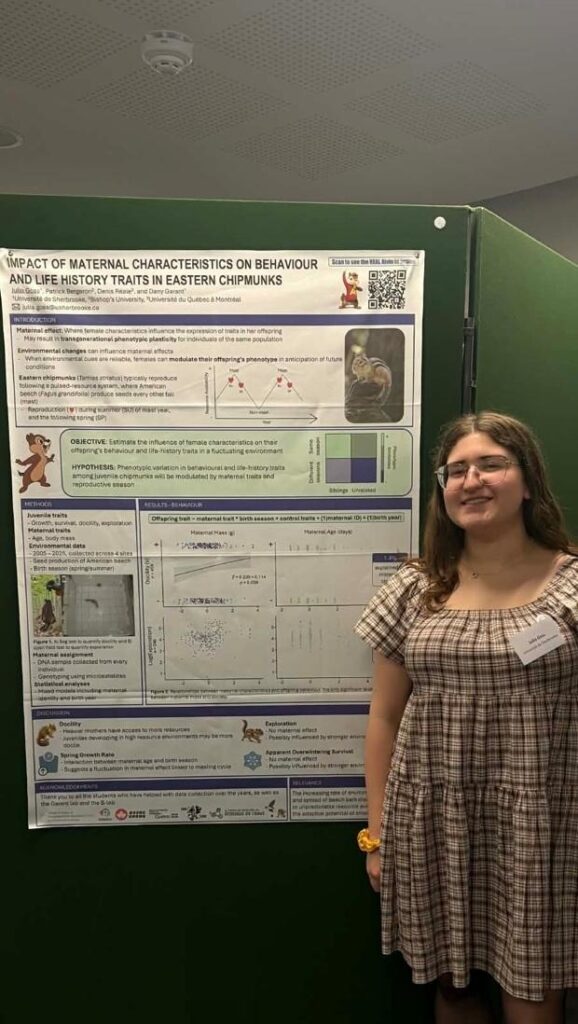
At this conference, I presented the latest results of my master’s project, looking into the impact of maternal characteristics, specifically age and mass at reproduction, on behaviour and life-history traits in Eastern Chipmunks (Tamias striatus) in a fluctuating environment. In southern Québec, chipmunks reproduce following the masting cycle of American beech (Fagus grandifolia) trees, resulting in two reproductive seasons, being the summer before a masting event, or the following spring. I was able to determine that heavier mothers produced more docile offspring, with greater growth rates than lighter mothers, and that older mothers produced offspring with greater growth rates when they reproduced in the spring but not in the summer. These results suggest maternal effects on certain behavioural and life-history traits in Eastern chipmunks, and that their development may be influenced by variations in resource availability. During the poster sessions, I was able to meet and discuss with many professionals in the field, gaining valuable insight and engaging in thoughtful discussions, which will help further my research. In particular, I met a student who was developing a new software to quantify different behaviours in fish, and discussed the possibility of modifying the software to work for a wider variety of taxa.
This was a special edition of the ASAB conference, as it will be the last conference for Professor Innes Cuthill, a pioneer in the field evolution of animal camouflage, before his retirement. In his honour, the theme of the conference was how sensory information affects behaviour. There were so many interesting presentations about the influence of sight, sound, smell, taste, and touch, across the entire animal kingdom, from moths, to mantis shrimp, to lemurs. It was very enriching to learn about the advances in animal behaviour across the globe, and it was especially touching to see the impact that Professor Cuthill has had on the field of animal behaviour throughout his academic career.
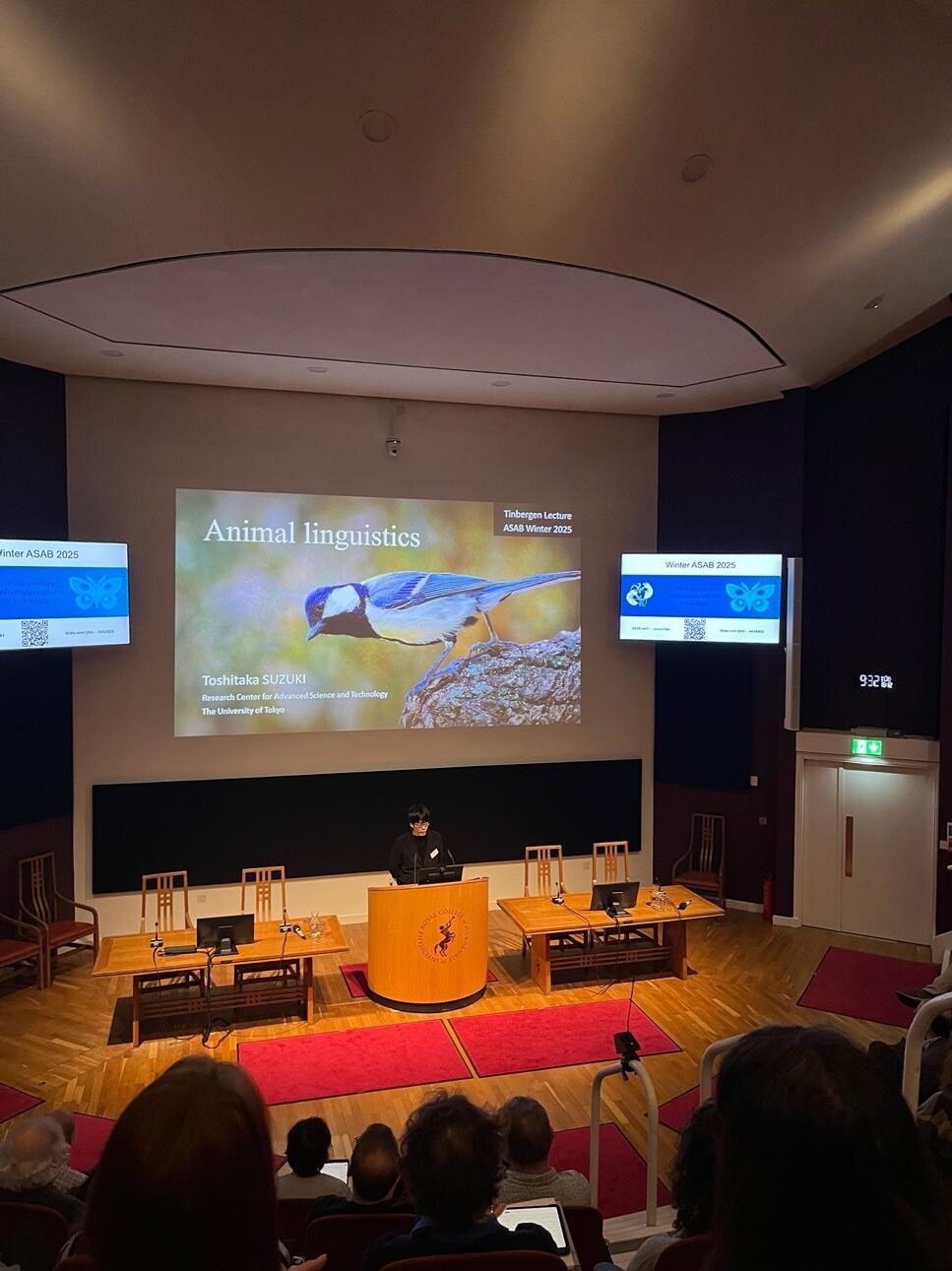
One of the highlights of the conference for me was the Tinbergen Lecture, given by Toshitaka Suzuki, founder of the world’s first laboratory researching animal linguistics. It was a very captivating talk where he shared all the different ways non-human animals communicate, in particular his groundbreaking work with the Japanese tit, showcasing how specific calls and movements have specific meanings.
In addition to the conference activities, including nightly trips to local pubs, I took the opportunity to explore the beautiful Scottish scenery. As it was my first time in the United Kingdom, I fell in love with the culture and found the landscapes absolutely mesmerizing. I visited renowned locations around Edinburgh, such as the Edinburgh Castle, hiked Arthur’s Seat and Calton Hill, and, of course, visited the iconic Edinburgh Christmas markets, as well as toured the Scottish Highlands, stopping at the breathtaking mountains in Glencoe, the magical Isle of Skye, and searched for Nessie at Loch Ness.


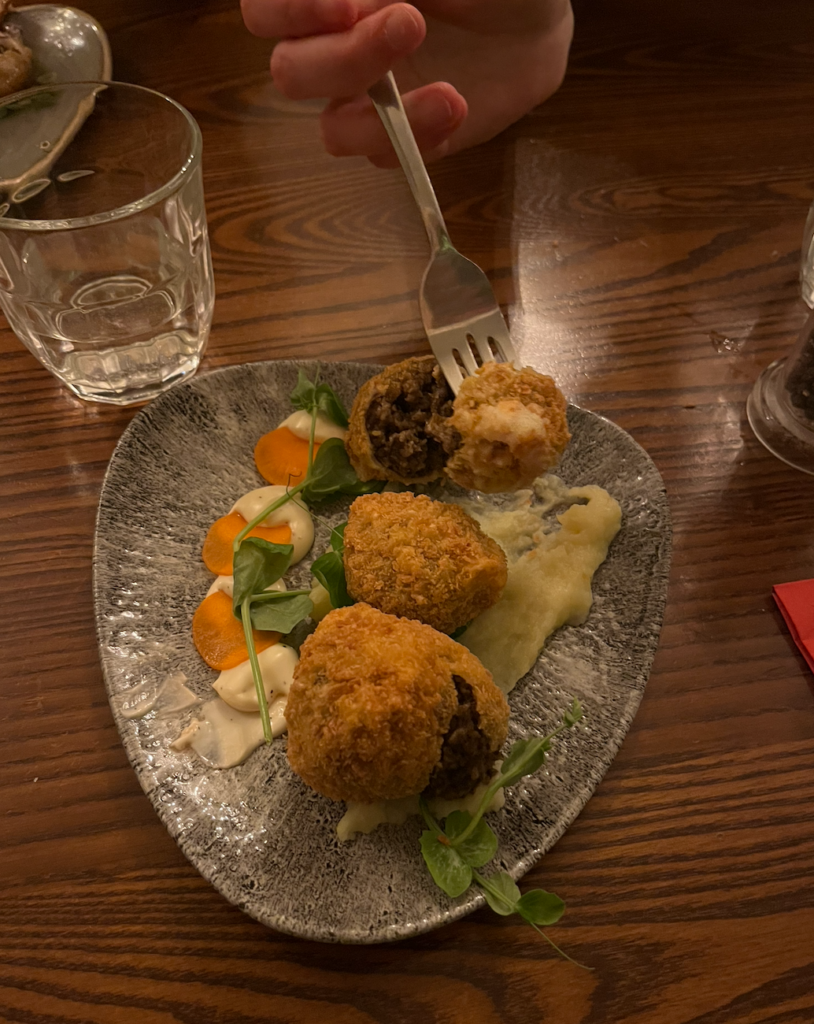
I am very grateful to the QCBS for supporting my participation at this international conference, which not only allowed me to further my academic career by creating valuable connections but also allowed me to experience the beautiful Scottish landscapes – and I even tried haggis!
About the author:
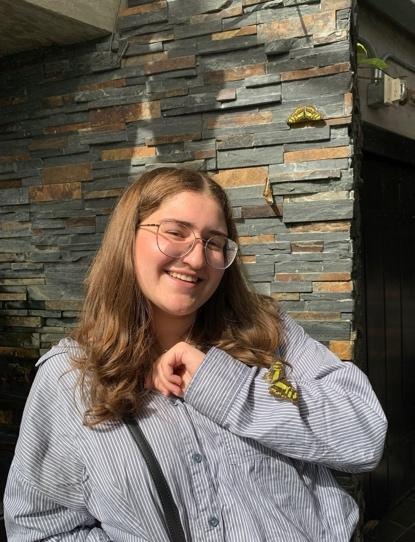
Julia Goss is a master’s student at Université de Sherbrooke under the co-supervision of Dany Garant and Patrick Bergeron (Bishop’s University). She studies the influence of maternal characteristics on juvenile behaviours and life-history in Eastern chipmunks.


0 Comments