Par Gabrielle Bibeau, étudiante à la maîtrise à l’Université de Sherbrooke
Sorties en forêt, conférences inspirantes, échanges entre passionné·es et nouvelles amitiés : voilà les mots qui me viennent en tête en repensant à la rencontre annuelle 2025 de la Fédération québécoise des groupes de mycologues (FQGM). Cette édition, organisée par les Mycologues Amateurs de l’Outaouais, s’est tenue à Gatineau du 25 au 28 août.
En tant que membre du Cercle des mycologues de l’Estrie, j’ai eu la chance d’y participer. Actuellement étudiante à la maîtrise en biologie à l’Université de Sherbrooke, je travaille sur la modélisation de la distribution de plusieurs espèces de champignons natifs du Québec. J’ai proposé aux organisateurs de présenter mes résultats préliminaires, et c’est avec enthousiasme qu’ils ont accepté de m’inclure dans la programmation des conférences.
Dès mon arrivée, j’ai été accueillie chaleureusement par les organisateurs et les participant·es. L’ambiance était empreinte de bonne humeur et d’anticipation pour la fin de semaine à venir. J’ai rapidement constaté que j’étais, à l’exception d’une jeune enfant, la plus jeune personne présente. Ce décalage générationnel m’a un peu déstabilisée au début, mais je me suis vite liée d’amitié avec un autre participant plus près de mon âge, avec qui j’ai partagé tous mes repas.
Gabrielle débute sa présentation de ses travaux de maitrise.
Le samedi matin, jour officiel du début des activités, marquait aussi ma présentation. C’était la première fois que je présentais oralement mes travaux de maîtrise, et j’étais bien stressée ! Heureusement, tout s’est déroulé à merveille. Les personnes présentes étaient curieuses et ont posé de nombreuses questions pertinentes, allant même jusqu’à me recommander de nouvelles sources de données d’une valeur inestimable. Ces échanges ont été extrêmement enrichissants pour mon projet de recherche.
J’en ai aussi profité pour expliquer l’utilisation de la plateforme iNaturalist, dans l’espoir d’encourager davantage de mycologues expérimenté·es à y contribuer. Puisque j’utilise ces données pour mon projet, il est essentiel pour moi d’augmenter le nombre d’utilisateurs ayant une expertise en mycologie.
Lactaire trouvé lors d’une sortie sur un couteau de mycologue.
Chaque après-midi, nous partions en forêt à la recherche de champignons, accompagnés de passionné·es de tous les niveaux. Malheureusement, les conditions météo de l’été n’étaient pas idéales pour la fructification fongique, et les trouvailles étaient plutôt rares. La majorité des spécimens récoltés étaient des polypores, des champignons plus résistants qui peuvent persister plusieurs années. Mais cela n’a en rien entamé l’enthousiasme des participant·es ! Plusieurs belles découvertes ont tout de même été faites.
Quelques tables de la grandes exposition de champigons ouverte au public.
Tous les champignons cueillis étaient rapportés à l’hôtel, identifiés par des expert·es, puis classés sur des tables. Au fil des sorties, cela a donné lieu à une magnifique exposition regroupant des centaines de spécimens différents. Cette exposition a été ouverte au grand public le dimanche en fin d’après-midi, permettant aux citoyen·nes de Gatineau de découvrir leur fonge locale.
En résumé, j’ai adoré mon expérience à la rencontre annuelle 2025 de la FQGM. Si l’occasion se présente à nouveau, j’y retournerai sans hésiter. Les rencontres et les apprentissages que j’y ai faits sont d’une grande richesse — pour mon projet de maîtrise, ma future carrière, et mon amour grandissant pour la mycologie.
À propos de d’auteur :
Gabrielle Bibeau est étudiante à la maîtrise en biologie à l’Université de Sherbrooke. Elle se spécialise en mycologie, en écologie et en modélisation. Curieuse et engagée, elle participe activement à des initiatives de vulgarisation scientifique, avec le désir de rendre la biologie accessible et captivante pour tous les publics.
By David Ross, Master’s student at l’Université du Québec à Montréal (UQAM)
This summer I had the opportunity to attend the Annual Conference of the Canadian Society for Ecology and Evolution (CSEE) in Sherbrooke, Quebec, to present preliminary work from my Master’s degree in bioinformatics. It was my first conference in over 10 years, and I was nervous to say the least…
Prologue
In the summer of 2015, I had just finished a Master’s degree in marine biology and ecotoxicology at McGill University. I was full of hope, and ready to put my experience and qualifications to use. My dream had always been marine turtle conservation, and I was exactly where I thought I needed to be. Unfortunately, plans don’t always work out as we hope, and I found myself adapting to life in Montreal outside of research and academia.
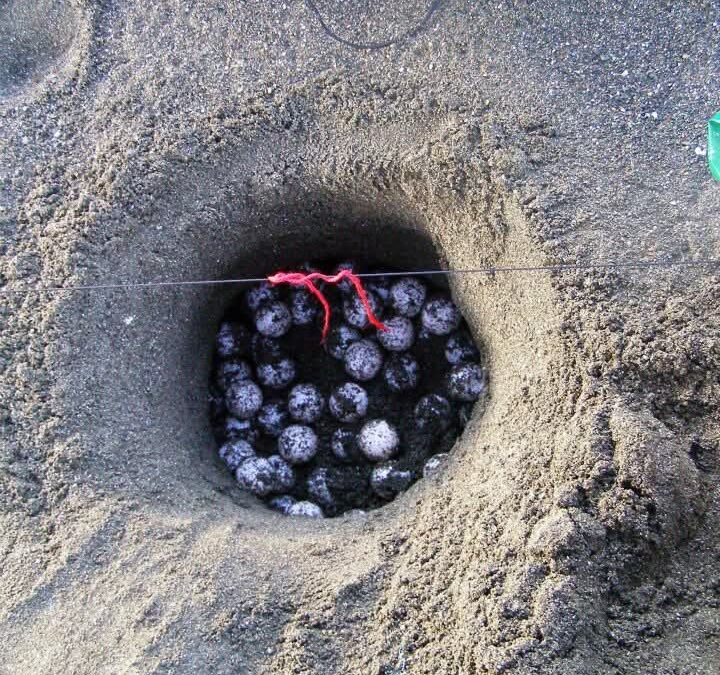
A newly relocated nest (left) and freshly hatched Green(?) sea turtles, from conservation work at Malena, Panama
Despite everything the city has to offer, more and more I found myself missing what had drawn me to biology: a passion for learning, for understanding and becoming a steward of our environment, and for collaborating and networking with an amazing diversity of people I have only met in academia. So, when I learned of a 1-year program in bioinformatics offered at UQAM, I jumped at the chance without even knowing what bioinformatics was, nor the first thing about computer programming.
A second chance
Two years later, and I can’t believe how much has changed. A 1-year program became 3, after deciding to pursue a second Master’s in bioinformatics, a decision I never thought I would make, but that has honestly changed my life. I’ve settled back into academia almost as if I never left. I’ve learned a lot about programming, genetic research, microbiology and molecular ecology, and most importantly, how bioinformatics can lead me back to a career in conservation (or close enough).
Isolating phyllosphere microbiomes for DNA sequencing
The first big step in this journey was to attend my first major conference in over 10 years and present my first poster at the CSEE in Sherbrooke. My work focuses on methods in metagenomics, specifically the assembly of bacterial genomes de novo from metagenomic shotgun sequencing – using a suite of computer programs in a process analogous to “assembling jigsaw puzzles from a mixture of many puzzles without knowing how many puzzles are present and what they look like” My hopes for the conference, on top of presenting my work, were to meet other researchers and research groups working with metagenomics, and to get a better understanding of the role bioinformatics plays in current ecological research.
Unexpected reunions
My week at CSEE started off with a field trip to the nearby Île du marais, a 3.6-km walk around the swampy end of Lake Magog. We got to see plenty of turtles, frogs, birds, mushrooms, and of course plants. It was also a great opportunity to connect with new people from across Canada. What followed was three days of wonderful talks on a wide variety of topics, some familiar, some new. I got to meet new collaborators, new friends, and quite a few of my lab’s colleagues whom I knew of through name alone.
Some flora and fauna from Île du marais
While I expected I may run into profs I recognized from my first degree, I was both surprised and extremely happy to reunite (if only briefly) with friends I had made and lost contact with in my absence from research. And though they have become professors with their own labs and research groups while I am back again as a student, reconnecting with them and feeling their happiness for me, and their support that I was able to come back to pursue my dreams again after 10 years, made this experience unforgettable.
About the author:
David is a Master’s student in informatics (bioinformatics) at l’Université du Québec à Montréal (UQAM), under the supervision of Professors Vladimir Makarenkov and Steven Kembel. His work focuses on methods for microbiome analysis, in particular the recovery of Metagenome-Assembled Genomes (MAGs), and applying this work to explore microbial diversity in the phyllosphere. He hopes to apply this skillset to study marine ecology, the potential effects of climate change to marine microbiomes, and the adaptations of organisms to these changes in order to improve conservation efforts.
By Olivia Rahn, PhD candidate at McGill University
Back in 2023, during my first year as a PhD student, I had the opportunity to travel to my first ever in-person conference: Species on the Move in Bonita Springs, Florida. In retrospect, Species on the Move perhaps set the bar too high as my first “real” conference – almost every talk title sounded relevant to my research, it was small enough that networking felt natural, and I left with tons of new ideas, many of which informed my future thesis chapters. We also saw lots of Florida nature and wildlife…
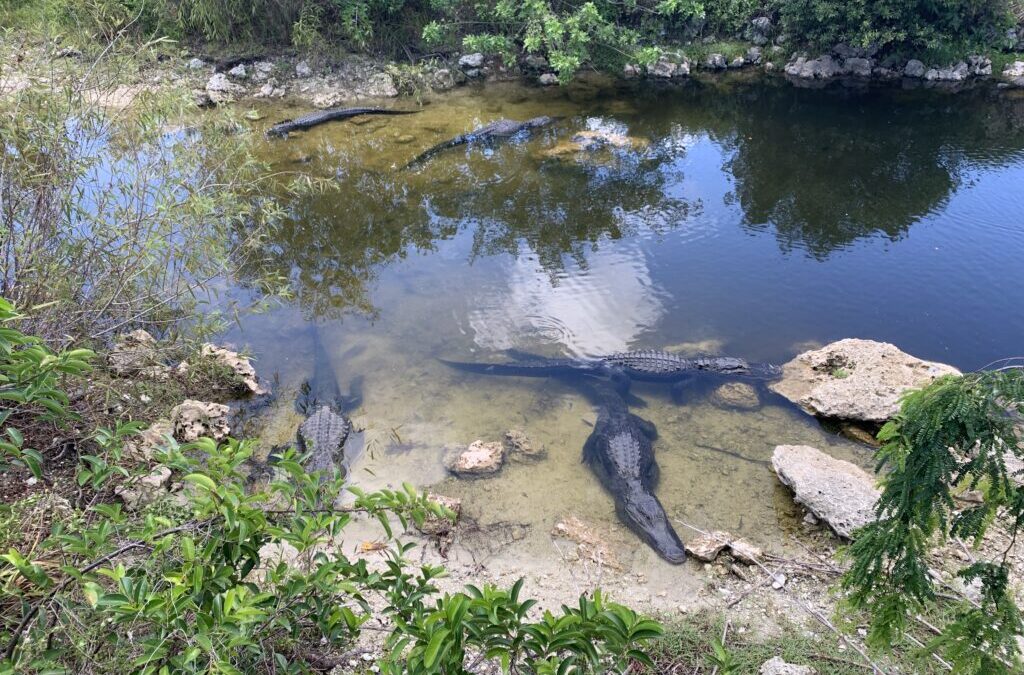
Some alligators hanging out in a pondA cypress (Taxodium ascendens) forest in Big Cypress National PreserveSome urban wildlife in the form of a parking lot treefrog – exact species unknown
… went wading through a swamp (unfortunately not pictured here), and I got to see a lot of my friends present their work.
Species on the Move is what comes to mind when I think about a conference that is truly worth travelling for.
Given that, I’ve started thinking about the next Species on the Move in 2026, which is taking place at Sun Moon Lake in Taiwan. I’m now much further along in my PhD than I was in 2023 and hoping to graduate sometime in the next year or so, which prompts some thoughts about how much more equipped I now feel as a researcher! It has also, in all honesty, prompted me to remember that I never wrote a blog post about the 2023 rendition of Species on the Move. Here, I hope to reflect a bit about what I learned at the last Species on the Move and what I think will be different about the next one.
Prior to Species on the Move in 2023, I had never given a talk before, never travelled for a conference, and was still coming up with the ideas that would eventually form my thesis. Understandably I was very nervous for my talk and practiced a lot. That actually hasn’t changed too much – I still practice my talks quite a bit and have realized I will probably never be the person who just wings it, but I certainly feel less nervous.
At the time, I was also coming from a fieldwork-heavy background but was interested in diving more into macroecology and computational approaches to studying ecology. I was intimidated by the methods I heard people talk about at Species on the Move, and didn’t really know how to get started with learning them. I was also feeling conflicted about working on a singular study system, which is what I had been doing up until that point for my thesis. It seemed like at least at Species on the Move, the studies getting the most attention were global data syntheses that involved many species and thousands of data points. Despite being slightly panicked by this at the time (do I need to do that?), I now truly feel like I’ve had time in my PhD to explore a lot of different approaches to studying ecology, including many computational ones. I’ve learned to dive into learning new skills and concepts without worrying too much about their difficulty, instead feeling confident that I am capable of learning them.
While learning these skills, I’ve been able to see the unique value in all types and scales of ecology studies. I’ve gotten the chance to work with bigger datasets and spatial scales, which is great for generalization but often leaves me worrying that I’m missing some important details. For other parts of my thesis, I’ve continued working with a singular species (the annual plant Rhinanthus minor) whose natural history, habitat and life cycle I really understand. With this work, I’m not usually worried that I’m missing information, but sometimes I wonder how much the trends we are seeing are applicable to other systems. In this way, being able to zoom in and out in terms of spatial and taxonomic scope has taught me much more than sticking to one scale ever could have.
At Species on the Move 2026, I’m excited to present new research and see what other people have been working on for the past 3 years, this time with more confidence and surefootedness than I had during the last Species on the Move! It will likely be my last conference before I graduate, and I can’t think of a better one to finish my degree with.
About the author:
Olivia is a PhD candidate at McGill University, supervised by Anna Hargreaves. She studies the causes of species geographic range limits, often using the annual plant Rhinanthus minor as a study system.
By Mikaela Gerwing, PhD Candidate at Concordia University
This year’s International Primatological Society (IPS) Congress took place in Antananarivo, Madagascar, in late July. The opportunity to present at the most prestigious conference in my field was already exciting, even without the possibility of exploring a country that I have dreamed of visiting for as long as I can remember. As a little girl growing up in Canada, I had two main points of reference for anything related to Madagascar. There was the TV show Zoboomafoo, a quirky children’s program whose main character was a Coquerel’s sifaka (Propithecus coquereli). The second was the Dreamworks animated film Madagascar which featured a lion, zebra, giraffe and hippo who escaped the Central Park Zoo and through their misadventure ended up stranded in Madagascar, where they encountered a multitude of lemur species. No matter how much I learned about the country of Madagascar as I grew up, the images from the show and film stuck in my mind. It wasn’t until this trip that I got to truly experience the magic of the real Madagascar.
Thanks to the QCBS, I was able to use the funds I received from an Excellence Award to help finance my trip from Montreal to Antananarivo. The IPS Congress was attended by hundreds of primatologists from across the globe, ranging from students like myself to the top names in our field, people whose papers I have cited for years and never imagined meeting in real life. Every single day of the conference was an overwhelmingly inspiring experience where I had the opportunity to learn from colleagues, share ideas, and make connections that will not only bolster our careers, but help us elevate primate conservation. Each day was filled with different presentations and workshops, and on the final day I had the opportunity to present my research on a stage in front of dozens of people I admire. As I walked up to the stage my hands were shaking, but once I started speaking, I settled into my place and knew that my hard work had earned me the position I was finally in. A few hours later I was on the dance floor at the final banquet with the same famous primatologists I cite every day. It felt like an out-of-body experience to say the least.
While the conference was life-changing, what I really want to share in this piece is the two weeks following the conference, where I had the opportunity to join Dr. Travis Steffens and Dr. Keriann McGoogan, the founder and executive director, and board member (respectively) of the Canadian charity Planet Madagascar, on a trip to two field stations. As part of my PhD program at Concordia University, I am required to fulfill a 200-hour internship, which I had already organized with Planet Madagascar prior to finding out I was accepted to present at IPS. Planet Madagascar aims to “build sustainable forest communities by conserving Madagascar’s unique biodiversity while improving the lives of people living in Madagascar and empowering people in Madagascar and elsewhere to contribute to the preservation of Madagascar’s wildlife” (Planet Madagascar’s website, 2025).
The first stop on our trip was at the new La Mananara field station for the organization Wildlife Madagascar, located on private land within the Anjozorobe-Angavo protected forest in central-eastern Madagascar. The site hosts a lush rainforest full of creatures to discover – even in their chilly dry season. We hiked up and down steep mountainsides, through mud and through rice fields to see wild indris (Indri indri), diadem sifakas (Propithecus diadema) and Goodman’s mouse lemurs (Microcebus lehilahytsara) as well as various species of (super cool) chameleons. We got to see Wildlife Madagascar’s new dining set be delivered in preparation for the many researchers, tourists and guests that will help sustain their project and protect the wildlife and forest that surrounds them.
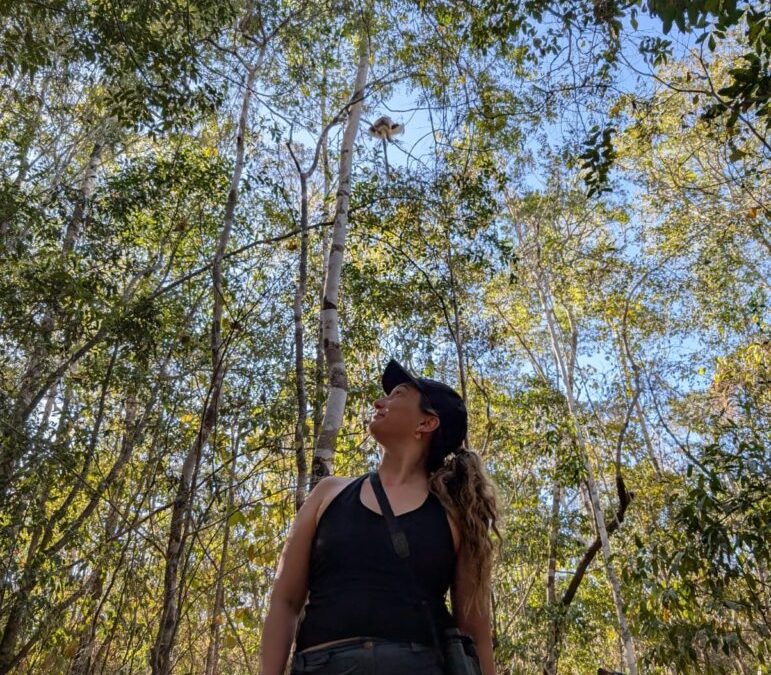
After three nights camping at La Mananara, Travis, Keriann and I began our journey to Planet Madagascar’s field site in the dry forest of Ankarafantsika National Park, located in northwest Madagascar. After two days on pot-hole filled roads, we made it to the park where we could immediately see Coquerel’s sifakas (Propithecus coquerel) high in the trees above the parking lot – the abundance of lemurs in the park would prove to be awe-inspiring – aided substantially by the work being done at Planet Madagascar. Throughout the week I spent in Ankarafantsika, I had the absolute pleasure of seeing not just the sifakas, but Brown lemurs (Eulemur fulvus), Sportive lemurs (Lepilemur), Mouse lemurs, various chameleons, crocodiles, and a swath of different, impressive birds. As an intern for Planet Madagascar, I already knew the incredible work they were doing for forest regeneration, fire management, community development and conservation education and communication before I arrived, but it was truly something special to witness the magic of their work in person.
We visited several nurseries run by Planet Madagascar’s Women’s Cooperative, an initiative that employs local women in sustainable agroforestry and forest restoration. The women in the cooperative plant and care for native tree seedlings until they are ready to be planted in key areas throughout the park by the Planet Madagascar team, as a method to restore destroyed and degraded forest that is essential to not only human but also lemur and wildlife livelihoods. Planet Madagascar also hires community members to create and sustain critical firebreaks throughout the park to manage the frequent wildfires that plague this dry ecosystem. I got to see the planting sites and firebreaks firsthand, helping me to truly understand the vastness of this project – which can actually be seen on satellite imagery. I also had the opportunity to visit the Andranohobaka school, which was built by Planet Madagascar and Seacology in 2022 in one of their three target communities, providing primary-school education to around 50 children who would have otherwise not attended school.
While Zoboomafoo and Dreamworks’ Madagascar are still sweet childhood memories, they have nothing on the beautiful reality of the real country of Madagascar. Nothing in that media can replace the magic of connecting with Malagasy people who care so much about these ecosystems, witnessing lemurs vertically leap through the trees high above, or marveling at the gigantic baobab trees native to the country. Dreamworks also got something else wrong – as Dr. Steffens likes to say, “King Julien should have been Queen Juliet, because lemurs are generally female dominant”.
Mikaela Gerwing is a wildlife conservation biologist and current PhD candidate at Concordia University, working in the department of Geography, Planning and Environment under the supervision of Dr. Sarah Turner and Dr. Renata Ferreira in the Primatology and Interdisciplinary Environmental Studies (PIES) Lab. Her research focus is threefold: the rehabilitation and reintroduction of bearded capuchin monkeys in the Brazilian Caatinga, human-wildlife coexistence in the area of release, and the effectiveness and ethical integrity of wildlife rescue centres in the areas of animal welfare, human welfare and conservation.
Mikaela holds a BSc. in Natural Resources Conservation, Global Perspectives from the University of British Columbia, Vancouver (2019) and an MS in Nonprofit Management from Columbia University, New York (2022). She has worked and volunteered in wildlife conservation and rehabilitation in four continents with countless animals, and most notably, spent two years working as a conservation biologist and the volunteer coordinator for Taricaya Eco Reserve and Rescue Center in the Madre de Dios region of Peru. Mikaela is passionate about wildlife conservation and reintroduction, community development, and animal welfare, and dreams to one day open and operate a nonprofit wildlife rescue center.
By Léa Mimeault, Master’s graduate from Concordia University
This summer 2025, I had the pleasure of presenting my findings at the 61st meeting of the Association for Tropical Biodiversity and Conservation, held in the historically and culturally rich city of Oaxaca, Mexico. I was looking forward to attending my first tropical-focused international conference!
I presented the second chapter of my MSc thesis, which explores human-wildlife conflict in southern Cameroon by examining local attitudes toward elephant conservation. I highlighted that although most households in my study area reported crop damage by elephants, attitudes toward elephant conservation remained generally positive. However, people who relied exclusively on agriculture for their income were more likely to hold negative views of elephant conservation, and such vulnerability to crop damage better predicted attitudes than the actual extent of damage experienced.
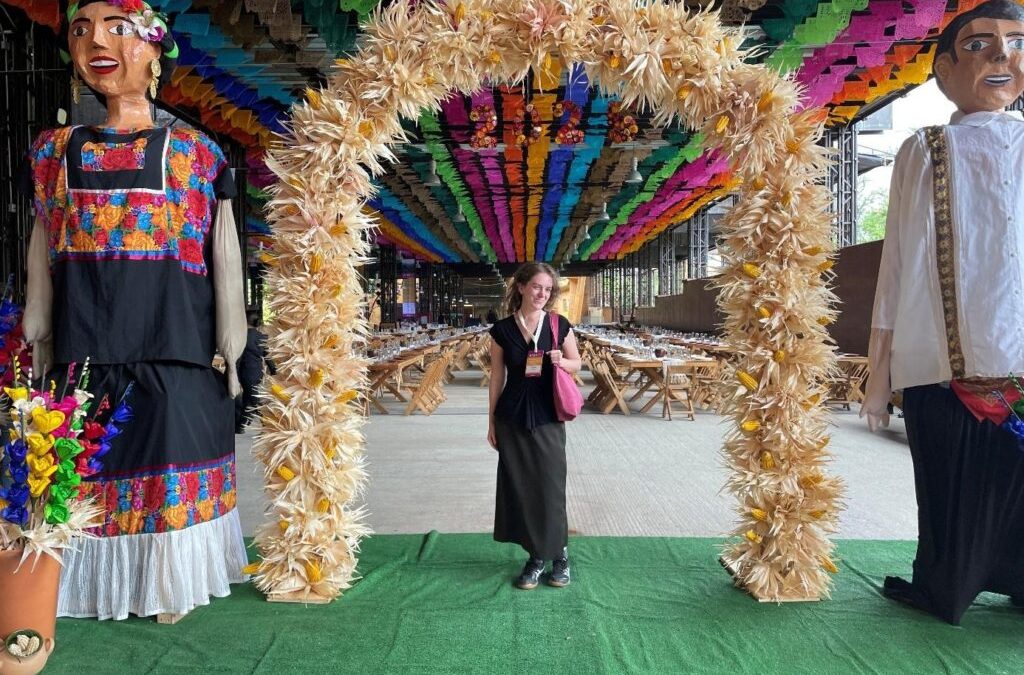
On the left, arriving at the vibrantly decorated conference venue, the Oaxaca Cultural and Convention Center. On the right, presenting during the “Human–Wildlife Conflict and Coexistence Strategies” session.
Surprisingly, this conference felt fairly broad, with relatively few people studying animal behavior compared to those focused on forest monitoring and climate. However, this actually made it easier to find each other and form smaller discussion groups. We met a few times to discuss shared interests, such as methods to study human-wildlife interactions, and techniques to mitigate human-wildlife conflict. Not only did I connect with students who shared similar interests, I also met researchers I had cited in my own work (which I was not expecting, making it all the more exciting!). I also attended talks and seminars on methods for studying canopies using arboreal camera traps, as well as the ecology of insularity, which examines isolated ecosystems like oceanic islands which are natural laboratories for understanding biological and evolutionary processes.
Let’s be honest… part of the fun of attending a conference in another country is not only meeting new people, but also experiencing new cultures. The conference organizers did an excellent job of introducing participants to Mexican dances and traditional Oaxacan food. For example, we got to try mole negro, a dish of chicken with a rich sauce made from chocolate and warm spices, as well as chapulines, which are toasted and seasoned grasshoppers you can eat on their own or add to meals. I also had the chance to explore Oaxaca beyond the conference itself, whether on my own, with my colleague France Anougue and my supervisor Robert Weladji, or with new acquaintances from the conference. We wandered through the town, visited markets, the Ethnobotanical Garden, and religious and historical buildings such as the Templo of Santo Domingo.
Two traditional Oaxacan dishes served at the conference. On the left, mole negro; on the right, crumbled toasted chapulines with two types of salsa.
On the left, the façade of the Templo de Santo Domingo. On the right, yours truly on a guided tour at the Ethnobotanical Garden.
A very sincere thank you to QCBS for allowing me to close out my graduate experience with this conference!
About the author:
Léa Mimeault recently completed her MSc on forest elephant-human interactions under the supervision of Dr. Robert B. Weladji at Concordia University, Montreal. She is fascinated by the ecology and behavior of mammals. She is now looking forward to finding a PhD or another research project that will take her to new places, both geographically and professionally, and continue to challenge her.
By Ambar Maldonado Rodriguez, PhD student at McGill University
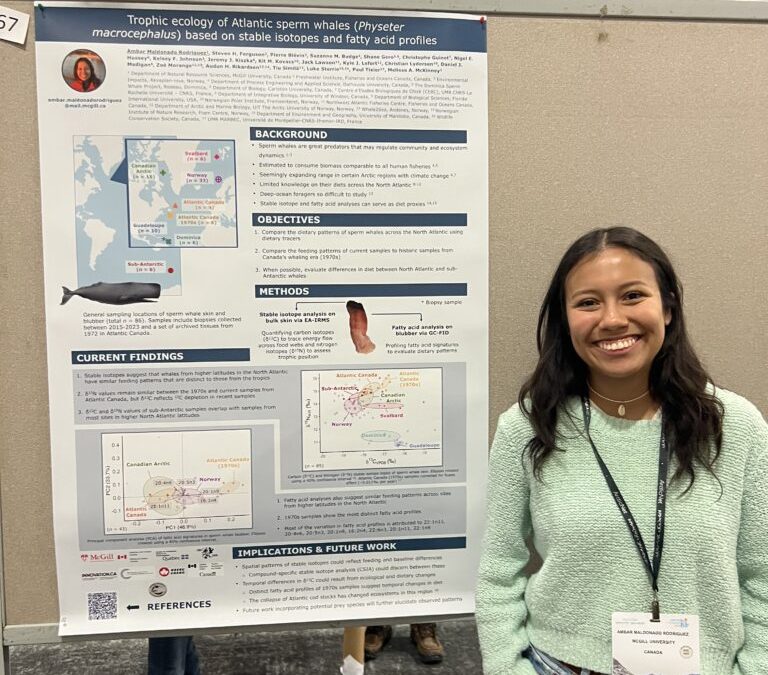
In 2024, I had the opportunity to attend two international conferences with partial funding from the QCBS. One was the biennial conference of the Society for Marine Mammalogy in Perth, Australia, and the other was ArcticNet’s Arctic Change Conference in Ottawa, Canada. While I presented similar work in both, sharing my research on the trophic ecology of North Atlantic sperm whales, my experiences were quite different given the nature of each conference. Both experiences taught me a lot, however, both on the importance of science communication and on the research going on in my fields. I compiled here some advice that I found useful during both conferences and that I think could be helpful for any student presenting at or attending a conference for the first time.
Prepare your poster or presentation well in advance
Preparing your poster or presentation well in advance will help ensure that you are fully satisfied and proud of the work you are sharing and thus remove some stress on the day of the event. It will give you an opportunity to show your work to your peers and supervisors and get feedback from them on what could be improved. You often have to upload your posters and presentations to the conference site ahead of time, so starting them early will prevent you from having to rush and submit something you end up unsatisfied with.
Practice your talk with people from different backgrounds
Whether it is your presentation talk or a speech for your poster, it is a good idea to give your talk to a variety of people from different backgrounds to ensure that your explanations are clear for people unfamiliar with your work. While it is useful to get feedback from your lab members, it is also a good idea to hear what your friends and family think, as a presentation in an international setting will often have an audience of diverse backgrounds. Practicing multiple times will also help you feel more comfortable and relaxed on the day of!
Check the conference requirements and guidelines
Usually, the conference site will offer information to presenters on their guidelines and requirements. Always make sure to check these before you start working on your poster or presentation and again once you’re done and are ready to submit your work. This will help avoid awkward and stressful situations such as your presentation not running adequately or your poster not fitting in the space provided.
Check for any traveling requirements/visas
You may need specific travel documents/visas for attending international conferences and it’s always a good idea to do some thorough research on this months in advance, as paperwork can take quite a while.
Do some research ahead of time
Conferences can be quite busy and sometimes overwhelming, so it’s a good idea to look at the schedule and figure out the talks and events you want to attend well in advance and mark them down on your calendar. You can also have a look at the presenters list to see if anyone you would like to connect with will be attending. This is especially useful if you’re thinking about the next steps in your academic career!
Don’t be afraid of talking to people
People attending these conferences are often very keen on meeting new people in the field. If you would like to talk to someone, whether it is about their work or yours, don’t be afraid to approach them. Conferences are a great place to network and to find people working on a similar topic to yours, which can be very helpful for throwing ideas around.
Don’t skip the poster sessions!
A lot of times, you can learn about new interesting work in your field by walking through the poster section. A lot of new and upcoming research projects will be presented here, and it’s a great chance to chat with people in a more relaxed setting than in the Q&A part of a talk.
Ensure you get some rest and enjoy!
While it can be tempting to attend every talk, poster session, and social event during a conference, remember to take it easy and have some breaks as well. International conferences are often multi-day events, and they can get quite tiring if they last all day. Make the most of it and enjoy while also taking breaks to recover.
About the author:
Ambar is a PhD student working under the supervision of Dr. Melissa McKinney in the Ecological Tracers Lab of McGill University. Her research focuses on the trophic ecology, contaminant loads, and nutritional value of odontocetes in the North Atlantic.