Rôle sur l’équipe Beagle: Coordonnateur et Éditeur Role on the Beagle Team: Coordinator and Editor
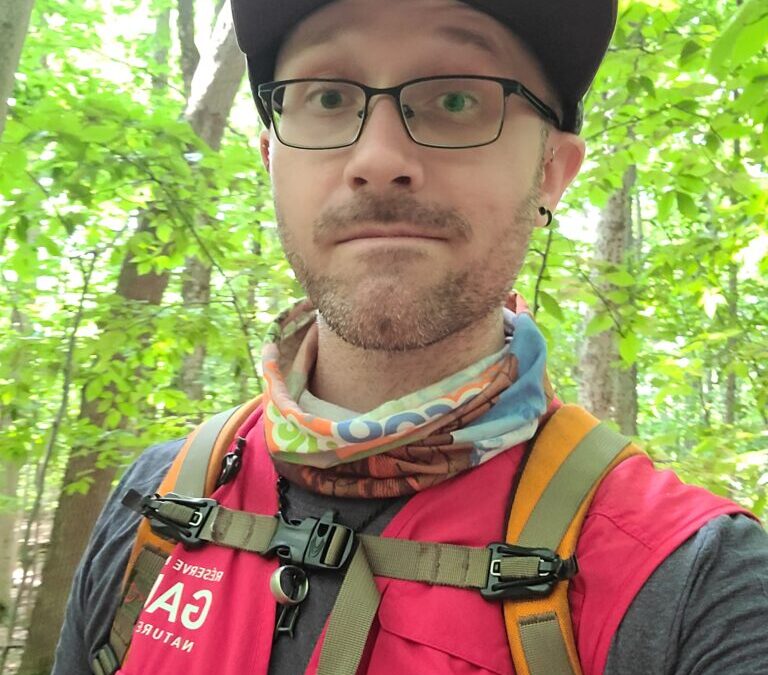
David is a Master’s student in informatics (bioinformatics) at l’Université du Québec à Montréal (UQAM), under the supervision of with Professors Vladimir Makarenkov and Steven Kembel. His work focuses on methods for microbiome analysis, in particular the recovery of Metagenome-Assembled Genomes (MAGs), and is applying this work to explore microbial diversity in the phyllosphere. He hopes to apply this skill set to study marine ecology, the potential effects of climate change to marine microbiomes, and the adaptations of organisms to these changes in order to improve conservation efforts. David’s greatest passions are sea turtles, the deep sea (generally everything in the ocean), hiking, reading, board games, video games, and anything that piques his curiosity.
David est étudiant à la maîtrise en informatique (bio-informatique) à l’Université du Québec à Montréal (UQAM), sous la supervision des professeurs Vladimir Makarenkov et Steven Kembel. Ses travaux portent sur les méthodes d’analyse du microbiome, en particulier la récupération des génomes assemblés des métagénomes (MAGs), et il applique ces travaux à l’étude de la diversité microbienne dans la phyllosphère. Il espère mettre à profit ces compétences pour étudier l’écologie marine, les effets potentiels du changement climatique sur les microbiomes marins et l’adaptation des organismes à ces changements afin d’améliorer les efforts de conservation. David se passionne pour les tortues marines, les profondeurs marines (et plus généralement tout ce qui touche à l’océan), la randonnée, la lecture, les jeux de société, les jeux vidéo et tout ce qui éveille sa curiosité.
By Louis-Philippe Bateman, MSc student at McGill University
A Return to Osteomancy
If you lived in Ancient Greece and wanted to know what the future held, you might have visited an oracle. You would enter a shadowy chamber lit by oil lamps and pose your question to a robed figure. That person would perform a ritual involving chicken bones and return with a cryptic prophecy — hopefully one that didn’t involve killing your father and marrying your mother.
Nowadays, little has changed except the setting. If you want to know the future of the world’s ecosystems, you enter a narrow, windowless office and consult an underpaid grad student in an old conference T-shirt. That poor grad student spends months coaxing a large silicon brain in strange tongues — R, Python, and Julia — to produce a “model” predicting what bleak future awaits the natural world.
You might be surprised to learn that some people think we should return to consulting bones — not through mysticism, but through science. This is the idea behind the emerging field of conservation paleobiology, which contends that the fossil record can help predict, or at least inform, the future of biodiversity, ecosystems, and Earth systems.
The Conference
Full disclosure: I am one of these heretics. That is what brought me and 100-odd palaeoecologists, paleontologists, historical biologists, and nerds to Zürich in late July, for the 4th Crossing the Palaeoecological-Ecological Gap and 3rd Conservation Paleobiology Symposium (CPEG-CPB), which were jointly held at the University of Zürich. My participation in this event was generously supported by a QCBS Graduate Excellence Award (and thankfully so, considering how expensive Zürich was). The conference was a blast. I mingled with colleagues from around the world, all striving to harness the fossil record to improve our forecasts for the future. I even presented my own contributions to the field and got feedback from world experts. I got to attend four days of brilliant talks, posters, and workshops, and experienced the joys of coffee-fueled jetlagged socialization.
The conference also gave me my first broad view of the field, its accomplishments, its potential, and its limitations. This includes a few optimistic application scenarios. Lucia Snyderman, a PhD student in England, measured stable isotopes in pelican fossils to identify potential Dalmatian pelican reintroduction sites in English wetlands. Prof. Hervé Bocherens, from the University of Tübingen, measured stable isotopes from diet in ancient and recent European bison bones and found that the species preferred open areas before widespread human expansion that forced them into woodlands. Prof. Ruth Thurstan, from the University of Exeter, used old news reports from the 19th century to estimate how fish populations have collapsed in the past hundred years.
Promises and Perils
Why study the past to understand the future? There are more reasons than I can cover here, but a few come up repeatedly in debates on conservation paleobiology. First, it’s difficult to detect and analyze ecological change using short time series. The fossil record, by contrast, spans hundreds of millions of years. Second, gathering new long-term ecological data is slow and costly, whereas large databases of fossil occurrences and traits already exist and are increasingly standardized. Third, even Earth’s most “pristine” ecosystems have been altered by human activity, leaving us with no true baselines for comparison — a problem deep time doesn’t share. Lastly, and perhaps most importantly, many key biological insights simply wouldn’t exist without fossils. Darwin’s theory of evolution would have been far weaker without them, and conservationists might not grasp that mass extinctions are possible if the fossil record hadn’t shown that they’ve already happened at least five times.
These criticisms are perhaps unfair to levy against a young field. However, the field will have to pay heed to these problems if it wants to progress and become more useful. There are many pathways to make research more applicable. This includes making straightforward policy recommendations, publishing in open access journals to make conservation paleobiological work more accessible, adopting the lingo of conservation biology, and collaborating with ecologists that work in the present day.
Bridging the Gap
This short article is a small effort on my part to narrow the gap between paleontologists and ecologists. In fact, I compel you to integrate the past into your work. There are many ways you can help narrow it to. You can cite conservation paleobiological studies to support your points. You can integrate deep time and historical data into your analyses thanks to the multiple publicly available databases like NEOTOMA, NOW, the Paleobiology Database, and the BioDeepTime database. You could maybe attend the next CPEG-CPB meeting in two years (registration is free for students and postdocs and you can attend online). In other words, what are you waiting for to (partially) reject modernity and embrace the (deep time) tradition?
About the author:
Louis-Philippe Bateman is an MSc student in the Larsson Lab, broadly interested in the applications of paleontology in ecology and conservation. His master’s project studies mammal trophic network structure over the last 66 million years in North America.
By Alex Pace, Brogan Stewart, and Leila Vaziri, PhD candidates at Concordia University
Last month, a few of my colleagues and I contributed to the Blitz the Gap project: a nationwide bioblitzing campaign to crowdsource information about local flora and fauna. We were lucky to be assigned Canada’s first provincial protected area as our blitzing area: Algonquin Park, established in 1893. I’ve heard of this Ontario gem for years but never mustered the energy to visit. It’s difficult to justify a six-hour drive past the beautiful mountains of Québec in favor of Ontario’s hilly, boggy terrain. Yet, hidden in Ontario are some of the oldest trees known in eastern North America—over 1800 years old—so the prospect of old forests and a weekend chasing after invasive plants with some environmentalist friends was the perfect motivation to finally check it out. We were not disappointed.
For this bioblitz, our team had three specific tasks: logging species at the far end of hiking trails, increasing the number of plants recorded in the region, and finding both invasive and rare native species. Equipped with the iNaturalist app and its Google-backed AI-assisted plant recognition, the first two tasks were relatively easy. The only real challenge there was for us to introduce my colleague Brogan’s two-year-old to hiking. Taking photos of the mushroom-laden forest floor with a baby on my back turned out to be the hardest part of the trip, but so rewarding. For our invasive and rare species mission, we hunted down the park naturalist for leads. The conversation was so engaging that I completely forgot to ask my questions about old-growth forests.
The naturalist enthusiastically marked our map with circles, Xs, and notes. The good news: only one invasive species had spread deep into the park—the Northern Dusky Slug, a Eurasian native that hitchhiked with canoe campers. Otherwise, most invasives were concentrated along roads and trails, which is to be expected. Of course, the Old Railway Bike Trail was a hotspot, with the charming tufted vetch and bladder campion plants dominating the invasive bunch. They are not particularly harmful to the ecosystem, so I let myself be charmed. Otherwise, an interesting “invader” was the American Chestnut. It had started to appear in the park recently, allegedly thanks to vigilante ecologists planting seeds, eager to restore the pre-industrial chestnut forests. The species is native to eastern North America, but here it is surviving outside its natural range. For anyone unfamiliar with the dominance and importance of the American Chestnut in the ecology and cultures of the northeast before the 20th century, I highly recommend giving this a read. Billions of these trees succumbed to a disease imported from Japan, arguably the most dramatic ecological loss in North American history. After that fascinating conversation, we pointed to another remnant of transportation infrastructure for insight on invasives: the abandoned airfield.
Contrary to my expectations, the airfield was effectively untouched by invasives. Usually abandoned fields and heavily disturbed landscapes are hotspots for invasive species from other continents that outcompete native species. The park decided that instead of letting the abandoned airplane runway rewild naturally, they would transform it into a regionally exceptional ecosystem, altering it with controlled burns every seven to eight years. The result is a landscape of low-bush blueberries, raspberries, sweet ferns, and lichen, apparently with a few gray pines—a fire-tolerant species. It has also become a hotspot for black bears, which flock to the berry-rich open field. Fascinating.
When exploring the site, I was reminded that human-altered environments have the potential to foster biodiversity and novel ecological value, and do not always lead to invasions and homogenization. It also resurfaced the Intermediate Disturbance Hypothesis for me—the idea that moderate intensity disturbances can increase biodiversity by supporting both early- and late-successional species. Carefully designed human interventions, in some cases, can function as such beneficial disturbances. Sometimes even by mistake!
Exploring the park through a camera lens and AI, learning about new plant species, and contributing to citizen science was a real pleasure. Over our few days of bioblitzing, we catalogued over 120 species and 1000 observations. Yet we found no particularly harmful invasives. Initially, I was fighting feelings of disappointment, of not achieving a mission, but when invasives are difficult to find, it’s a good thing!
Walking through old growth eastern hemlock forests and the tallest yellow birches I’ve ever seen, initiating a new generation to hiking, learning about weird ecosystems and chestnut vigilantes, and hearing eastern wolves howling and chattering at night all made the trip to good ol’ Ontario well worth it.
A huge thank you to the Québec Centre for Biodiversity Science and the Blitz the Gap team!
Alex Pace is a doctoral candidate in the Department of Geography, Planning & Environment at Concordia University. He studies trees and patterns in their annual growth rings to further our understanding of climate and ecological change in vulnerable ecosystems of southern Quebec over the last millennium.
By Snigdhodeb Dutta, PhD Candidate at Concordia University, on behalf of the Concordia Pollinators team
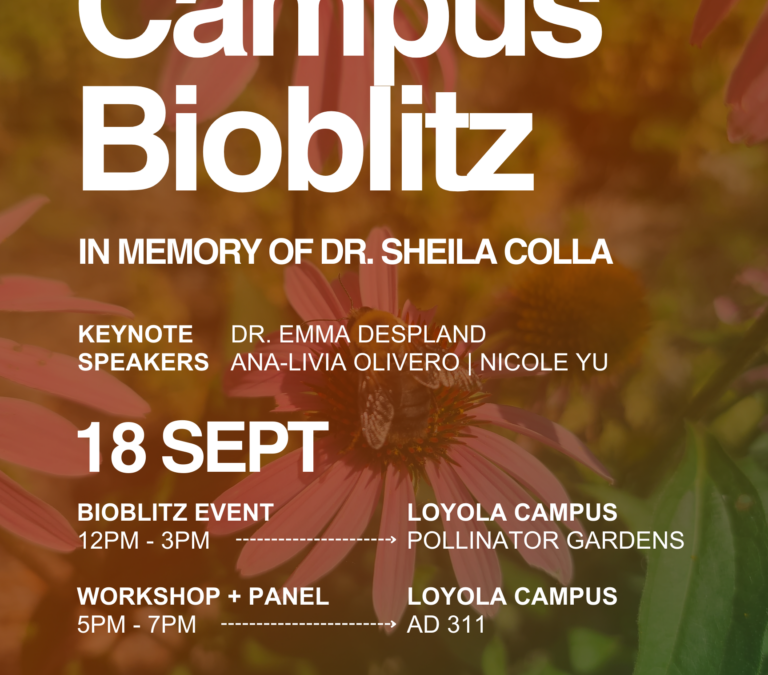
For two perfect September days, the 16th and 18th, our Loyola Campus felt less like an academic institution and more like a thriving ecosystem. We from the Concordia Pollinators team were privileged to host a Campus BioBlitz (Loyola Campus BioBlitz) in memory of Dr. Sheila Colla, whose passionate advocacy for native pollinators and bumblebee conservation continues to inspire. Her legacy, I think, urges us to pause and notice the minor, often overlooked lives buzzing and fluttering right under our noses—the ones that quietly anchor our local environment. What we discovered over those two days was, honestly, more than any of us expected.
The community response was incredible. More than 150 people, including students, faculty, and community members, came together, armed with cameras and field guides, their curiosity almost palpable. We spread out across the campus pollinator gardens with a shared goal: to spot and record as many species as possible in just a few hours. It felt less like a formal event and more like a collective treasure hunt.
There was a moment when someone called out, “Metallic green sweat bee over here!” and suddenly a dozen of us were huddled around a single flower, phones aimed at this tiny, shimmering insect. Another volunteer gently pointed out a nearly invisible caterpillar, steadily working its way along a milkweed leaf. Bit by bit, as a mix of seasoned experts and first-time observers, we tallied over 130 species, including bumblebees, hoverflies, beetles, and more. Every recorded sighting felt meaningful, not just as data, but as a quiet nod to Dr. Colla’s work.
As the afternoon faded, we moved inside, where the energy shifted but didn’t fade. The workshops sparked some truly engaging conversations, and Dr. Emma Despland’s keynote which honored Dr. Sheila Colla’s legacy while framing the urgent challenge of biodiversity loss provided a powerful foundation for reflection. Ana Lívia Oliveira and Nicole Yu’s presentations further enriched the dialogue, offering crucial perspectives on the practical steps and diverse strategies needed to foster urban biodiversity and support resilient pollinator populations. The synergy between these talks resonated deeply with everyone in the room.
We owe a huge thank you to every person who joined, volunteered, or shared their knowledge. A special mention goes to Rosa Alicia Castillo, Moses Rupak Raj Vedala, and Jackie Martin. This event wouldn’t have happened without their hard work. (And thank you to Anthony Arsenault for the group photo that perfectly captured the day’s spirit!)
Looking back, the BioBlitz did more than just catalogue species; it felt like a small but meaningful act of reconnection. In the same way that researchers might track ticks to assess ecological health, our efforts helped map the life in these urban green spaces. It’s a reminder that you don’t need to go far to encounter wonder; sometimes it’s right there, in a campus garden, waiting to be noticed. We’re already looking forward to the next one.
How You Can Continue the Quest for Biodiversity
The quest for discovery doesn’t have to end when the BioBlitz is over! Just as Erica Fellin encouraged people to submit their findings to eTick.ca, you can continue to be a citizen scientist right here in Montreal.
When you’re outside:
Slow down and look closely. Biodiversity is everywhere—in a crack in the pavement, on a single flower, in the bark of a tree.
Use your phone as a tool. Take clear photos of the insects, birds, and plants you see. Try to capture different angles.
When you’re home:
Upload your findings! Submit your photos to platforms like iNaturalist. Your observations become part of a global scientific database, helping researchers like us track species distribution and abundance over time.
Share your passion. Talk about what you saw with friends and family. The more people who appreciate local biodiversity, the more we can do to protect it.
This BioBlitz was a powerful reminder that conservation is a community effort. Together, we can ensure that the buzz and flutter of life on our campus continues to thrive for generations to come.
Snigdhodeb Dutta is a PhD Candidate in Biology at Concordia University, where he’s usually found figuring out what fish are up to these days. He’s probably logged more hours observing aquatic ecosystems than most people have spent scrolling through Instagram. When he’s not underwater (metaphorically, at least), he’s championing biodiversity with the Concordia Pollinators team, because apparently saving the planet requires expertise in both things with fins and things with wings.
By Molly Gautreau, MSc student at McGill University
With the support of the Quebec Centre for Biodiversity Science (QCBS) through the BioBlitz Champion Grant, my lab was able to embark on a wonderful experience at Ouareau Forest Regional Park in the Lanaudière region of Quebec, from July 13 to 16, 2025. The Soper lab BioBlitz was a huge success and ignited a new love for identification in many of our lab members. For those who may be unfamiliar, a Bioblitz is when people come together to try and “record as many species within a designated location and time period as possible”, as described on the iNaturalist information page.
Although our arrival at the park was met by torrential downpours, we nonetheless pitched our tents and set up camp. We were determined to have a successful trip. After this one “setback”, characterized by the swollen creek and river, the weather was stunning for our observation days. For some members of our lab, it was their first time camping ever, and for others, their first time camping in Quebec. It was a great way to experience the beautiful ecosystems we have access to in this province, and it repaid us by showcasing an incredible amount of biodiversity.
The trip begins!Beautiful scenery in Ouareau Forest Regional Park
Our days were spent exploring the extensive trails throughout the forest in the Pont Suspendu sector of the park. In only three days, we were able to extensively document and cover over 15km (cumulatively) of trails and areas surrounding our campsite. Nights were spent digging through identification guidebooks and uploading observations to our BioBlitz project on iNaturalist.
Le Pont SuspenduMap of our observations across the Pont Suspendu sector of the Park
One of the goals of our BioBlitz was to meet as many of the challenges put forth by the “Blitz the Gap” team. We had goals to target certain blitzes, primarily: Missing Canadian Insect Species, Make a Splash, Made in Canada, Getting Even, More than a Monarch, Most Wanted. Our group has expertise stemming from lots of different backgrounds, which has made us all invested in different kinds of organisms. We know how important it is to get data on lesser-known, and Canadian, species. While more of a challenge to find (and ID) some of our favourite organisms, we understand that they are just as key to Canada’s biodiversity as the flashier organisms. Organisms like insects, amphibians, mosses, lichens, and aquatic plants often don’t get the love that other megaflora/fauna get, but are integral players in broader ecosystem functioning. In targeting these biodiversity gaps, we had hoped to lessen some of the bias and represent the lesser-known “little” guys.
Who are we looking at?
We were overall successful in capturing a wide variety of organisms. Our group, which was composed of 8 observers, was able to observe 637 organisms of 357 distinct species. Our group added new observations of certain species that had not been recorded in the park before; species such as the American Carrion Beetle, Honeycomb Coral Slime Molds, and a Cedar Waxwing. We were also able to record potential range expansions of five species. At the time of writing, 41% of our observations were of plants, 32% were of insects, and 15% were of fungi. We were even successful in capturing some of the amphibian and aquatic species diversity in the park. To us, this means that we succeeded in completing a major goal of our BioBlitz: representing the little guys!
A frog hidden in a log
The opportunity to host our own BioBlitz was an incredibly fulfilling experience. As familiar as we are with fieldwork, we understand that there is no one researcher who can go or be in every single ecosystem on Earth; there’s simply not enough funding or time. Everyone needs to help out where they can, and this can lead to positive impacts on biodiversity data. Getting more people interested in preserving Canada’s species through participation in citizen science can only have a positive impact on the preservation of overall biodiversity. The QCBS Champion Grant facilitated a unique experience for our lab, and will continue to inspire our own contributions to citizen science. We are still in the process of identifying all our observations, so please head over to our BioBlitz page on iNaturalist (Forêt Ouareau BioBlitz 2025) on iNaturalist if you would like to help us out!
The Soper Lab BioBlitz Team
About the author:
Molly Gautreau is a Biology MSc student under the supervision of Dr. Fiona Soper at McGill University. Her research is centered on tropical nitrogen-fixing trees and their roots, investigating the coordination of resource-acquisition traits. She is also passionate about entomology and has a soft spot for identifying beetles.
By Veronica Groves, a PhD candidate at McGill University
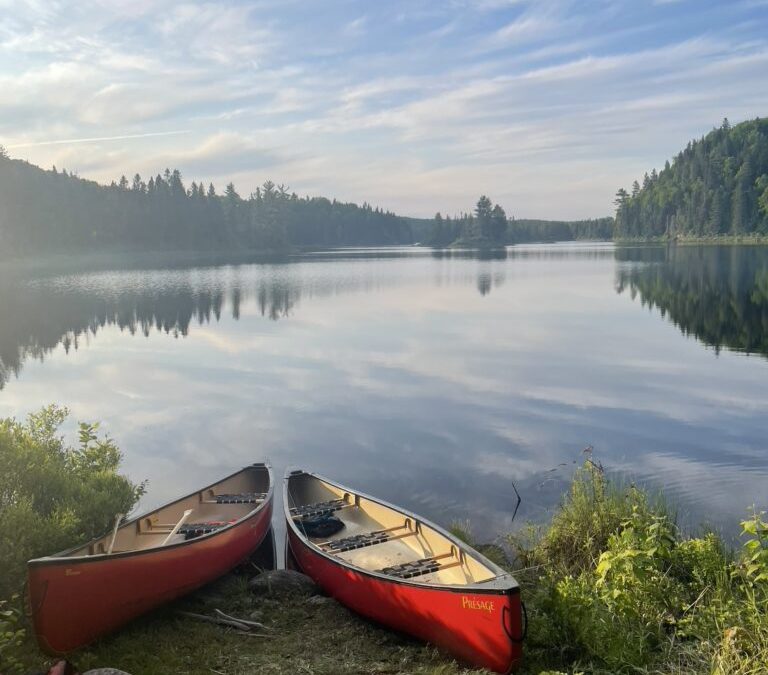
Thanks to support from the Québec Center for Biodiversity Studies, we participated in the “Blitz the Gap” initiative to document biodiversity using iNaturalist in Québec. Blitz the Gap is a Canada-wide citizen science initiative aimed at documenting biodiversity that has been historically underrepresented on iNaturalist. This includes species that are hard to access (for example in the Canadian North), or hard to identify (like with minnows and aquatic invertebrates). From June 13th-15th 2025, we – four graduate students in biology at McGill University – canoed and camped at a remote campsite on Lac Sans Bout in the Réserve faunique Mastigouche approximately 3 hours north of McGill University. We sought to document species which had previously not been listed on iNaturalist in the area with a focus on small underappreciated species such as minnows as we all have extensive experience with identification of Canadian freshwater species.
Our first challenge arose while trying to catch minnows. At our campsite, we could see many small fishes along the lakeshore. However, you are not permitted to set minnow traps in Québec provincial parks or wildlife reserves, which is typically how I catch minnows for research. This meant returning to a more childlike method of fish capture – hand fishing and chasing fish with a hand net. While these methods are lots of fun, we had very little success capturing minnows this way here. We were able to catch northern red-bellied dace using this method, however, and this fish had not been previously logged on iNaturalist for this lake. We had more success with fish capture using traditional angling under our recreational fishing permits that we purchased for the park. This way we were able to catch larger fish: two creek chubs and several brook trout. These were not the minnows we sought to document but again these fish were not logged on iNaturalist for this lake. This was surprising given that brook trout are a popular angling target and fishers often document their catches on iNaturalist.
Our second challenge came from viewing interesting species, but being unable to capture photographs before the animals disappeared. Specifically, we saw a newt swimming around the shore several times, but could not capture a photo. We also saw a porcupine who ran into the forest as we approached.
However, despite the above challenges, we were able to log 73 new observations for the lake and 52 new species including the carnivorous round-leafed sundew, the chalk-fronted corporal dragonfly and the mud Amnicola snail. In addition to the aforementioned rare species, we also logged several common species that had not been documented on iNaturalist for the lake like the eastern white pine, red maple, and paper birch.
We appreciated the opportunity that the QCBS champions grant provided for us to take a break from our research and go into the woods to document biodiversity. This is the way that many of us first fell in love with nature and biology, and so to return to these roots was reinvigorating.
About the author:
Veronica Groves is a PhD candidate in the Biology Department at McGill University under the supervision of Prof. Lauren Chapman. Having completed a H.BSc. Agri. Envr at McGill University and MSc. at Concordia University, Veronica specializes in the impacts of multiple stressors on freshwater fish behaviour, physiology, and life-history through the lens of conservation.